
Dark Mode


Predictive Bee Colony Climate Data
Data Science and Analytics
Tags and Keywords
Trusted By



"No reviews yet"
Free
About
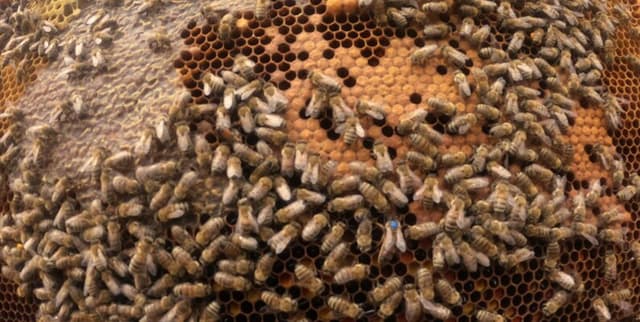
Apiary climate data focuses on the internal conditions of beehives and corresponding ambient conditions, crucial for developing predictive models of bee colony health. The data was collected as part of a master's thesis focused on creating a machine learning-based smart beehive monitoring system. By applying unsupervised anomaly detection algorithms to this data, it was determined that fatal health anomalies could be identified weeks before actual colony loss, allowing for proactive intervention. This resource provides key metrics for temperature and relative humidity inside and outside the hive environment.
Columns
The dataset includes 10 columns providing internal hive conditions, ambient conditions, and calculated differentials:
- DateTime: The date and time recorded in "dd.mm.yyyy hh:mm" format.
- Hour: The specific hour of the day the measurement was taken.
- T17: Temperature inside hive 17.
- RH17: Relative humidity inside hive 17.
- AT17: Apparent temperature inside hive 17.
- Tamb: Ambient temperature.
- RHamb: Ambient relative humidity.
- ATamb: Ambient apparent temperature.
- T17-Tamb: The difference between the temperature of hive 17 and the ambient temperature.
- AT17-ATamb: The difference between the apparent temperature of hive 17 and the ambient apparent temperature.
Distribution
This data product is derived from the
Hive17.csv file, which is approximately 104.86 kB in size. The structure contains 10 columns and features over 1000 rows of recordings. The data is suitable for analysis using standard statistical and machine learning tools, typically supplied in CSV format.Usage
This dataset is ideal for several applications, particularly within agricultural technology and machine learning research:
- Developing and testing unsupervised anomaly detection algorithms for remote bee colony health monitoring.
- Calibrating alarm systems designed to alert beekeepers to critical temperature and relative humidity shifts.
- Studying the relationship between internal beehive climate, external climate, and bee health markers.
- Creating predictive models to forecast colony loss or stress events.
Coverage
The measurements were collected from an apiary situated in Çanakkale, Turkey. While the data includes information relevant to hive numbers 17, 36, and 85 in context, the specific detailed column measurements provided relate primarily to Hive 17. The data represents conditions recorded at this single location and has an expected update frequency of Never, meaning it is a static snapshot of observations.
License
Attribution 4.0 International (CC BY 4.0)
Who Can Use It
- Data Scientists: For training and evaluating time-series analysis and anomaly detection models.
- Agricultural Technologists: For designing and validating smart monitoring hardware and software systems for apiculture.
- Academic Researchers: For studies focused on apiculture, climate impact on insect populations, and machine learning applications in agriculture.
- Beekeepers: To understand typical and critical climate metrics relevant to maintaining optimal hive conditions.
Dataset Name Suggestions
- Predictive Bee Colony Climate Data
- Çanakkale Apiary Condition Logs
- Smart Beehive Anomaly Detection Dataset
- Internal and Ambient Hive Climate Metrics
Attributes
Original Data Source: Predictive Bee Colony Climate Data
 QUALITY
Loading...