
Dark Mode


Geriatric Accelerometer Activity Data
Data Science and Analytics
Tags and Keywords
Trusted By



"No reviews yet"
Free
About
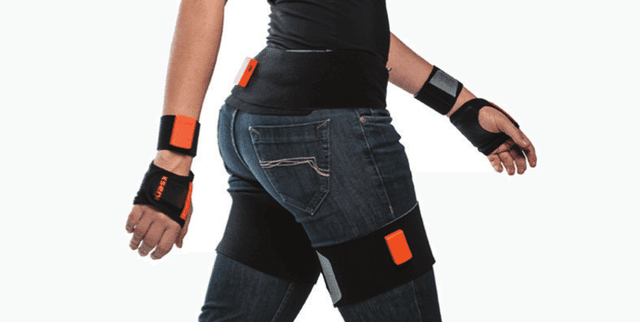
Designed to facilitate the development of machine learning models for human activity recognition (HAR) in older populations, this dataset captures movement data from 18 fit-to-frail subjects aged 70 to 95. The data was collected using two 3-axial Axivity AX3 accelerometers attached to the lower back and right thigh, recording at a sampling rate of 50Hz. Participants engaged in a semi-structured free-living protocol for approximately 40 minutes, ensuring a realistic representation of daily physical behaviour. Video recordings from a chest-mounted camera were utilised to professionally annotate the performed activities frame-by-frame, providing ground truth labels for activities such as walking, shuffling, standing, sitting, and lying.
Columns
timestamp: The date and time of the recorded sample.back_x: Acceleration of the lower back sensor in the x-direction (down) in g units.back_y: Acceleration of the lower back sensor in the y-direction (left) in g units.back_z: Acceleration of the lower back sensor in the z-direction (forward) in g units.thigh_x: Acceleration of the right thigh sensor in the x-direction (down) in g units.thigh_y: Acceleration of the right thigh sensor in the y-direction (right) in g units.thigh_z: Acceleration of the right thigh sensor in the z-direction (backward) in g units.label: The annotated activity code corresponding to the performed action (1: walking, 3: shuffling, 4: stairs ascending, 5: stairs descending, 6: standing, 7: sitting, 8: lying).
Distribution
The dataset is structured as a collection of Comma-Separated Values (CSV) files, with each file corresponding to a separate subject's recording.
- Format: CSV
- Subject Count: 18 participants
- Sampling Rate: 50Hz
- Recording Duration: Approximately 40 minutes per subject
- Structure: One CSV file per subject containing sensor readings and labels.
- Valid Data: Approximately 104,000 valid records per sample file segment.
Usage
- Machine Learning Model Training: Developing and validating algorithms for Human Activity Recognition (HAR) specifically tailored to older adults.
- Mobility Assessment: Analysing gait patterns and movement quality in fit-to-frail demographics.
- Geriatric Health Monitoring: Researching physical behaviour and identifying specific activities like shuffling or stair climbing which may indicate frailty levels.
- Sensor Fusion Studies: Investigating the effectiveness of combining data from thigh and back sensors for activity classification.
Coverage
- Demographics: 18 older adult subjects aged between 70 and 95 years; includes fit-to-frail individuals, with five participants utilising walking aids.
- Setting: Semi-structured free-living environment.
- Sensor Placement: Lower back and right front thigh.
- Date: Sample data indicates recordings from March 2021.
License
Attribution 4.0 International (CC BY 4.0)
Who Can Use It
- Academic Researchers: For studies in gerontology, biomechanics, and data science.
- Healthcare Developers: Creating applications for remote patient monitoring or fall risk assessment.
- Data Scientists: Specialising in time-series analysis and signal processing.
Dataset Name Suggestions
- HAR70+ Older Adult Activity Dataset
- Geriatric Accelerometer Activity Data
- Fit-to-Frail Senior Movement Records
- Dual-Sensor HAR70+ Activity Logs
Attributes
Original Data Source: Geriatric Accelerometer Activity Data
 QUALITY
Loading...