
Dark Mode


Monthly Korean Harbor Container Holdings
Product Reviews & Feedback
Tags and Keywords
Trusted By



"No reviews yet"
Free
About
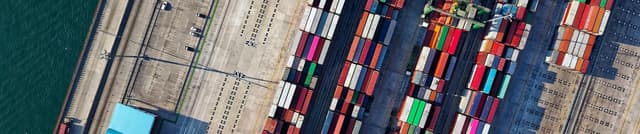
The data details the monthly inventory of shipping containers held at various ports across South Korea. It quantifies both empty and full containers, categorized meticulously by size, including 10ft, 20ft, 40ft, and other non-standard dimensions. This information provides deep insight into operational capacity and cargo flow. The original figures were sourced directly from the South Korean Government's official PORT-MIS System, making it a reliable resource for business and transportation analytics, focusing on specific metrics like container throughput and revenue tonnes (R/T).
Columns
The dataset contains 13 unique columns:
- ID: A numerical identifier for each record.
- Harbor: The name of the specific port facility, detailing data across 12 unique locations (with Busan being the most frequently represented).
- Date: Indicates the specific month and year corresponding to the inventory figures, ranging from January 2018 to May 2020.
- isKorean: A boolean flag that distinguishes whether the containers originated from Korean ships (True) or foreign ships (False).
- Full_10 / Empty_10: Quantity of full and empty 10-foot containers.
- Full_20 / Empty_20: Quantity of full and empty 20-foot containers.
- Full_40 / Empty_40: Quantity of full and empty 40-foot containers.
- Full_other / Empty_other: Quantity of full and empty containers of sizes other than 10ft, 20ft, or 40ft.
- R/T: The recorded Revenue Ton measure.
Distribution
The information is available in a single CSV file,
container.csv, which is approximately 44.11 kB in size. The structure includes 13 distinct data fields and 696 records. All key columns show 100% validity, with no mismatched or missing values reported. This is a static capture of historical data; the expected update frequency is listed as "Never."Usage
This data is highly suitable for analyzing logistics and supply chain efficiency within the region. Potential applications include: modeling port traffic and congestion, assessing regional import and export volumes, performing economic analysis specific to the transportation sector, and tracking the critical balance between empty and full container movements across South Korean ports.
Coverage
The geographic scope includes 12 unique harbors located throughout South Korea. The time range of the collected figures spans over two years, commencing on January 1st, 2018, and concluding on May 1st, 2020. The scope also includes a distinction based on vessel nationality, indicating if containers arrived via Korean or foreign ships.
License
CC0: Public Domain
Who Can Use It
- Logistics Analysts: For studying regional shipping trends and optimizing routing.
- Economists: For measuring trade flow and port contributions to the national economy.
- Supply Chain Managers: For planning container repositioning and managing fleet inventory based on historical demand.
- Academic Researchers: For creating models of maritime transportation and trade volume prediction.
Dataset Name Suggestions
- South Korean Port Container Inventory (2018-2020)
- Monthly Korean Harbor Container Holdings
- PORT-MIS Shipping Throughput Metrics
Attributes
Original Data Source: Monthly Korean Harbor Container Holdings
 QUALITY
Loading...