
Dark Mode


Global Male Fertility Reference Data
Patient Health Records & Digital Health
Tags and Keywords
Trusted By



"No reviews yet"
Free
About
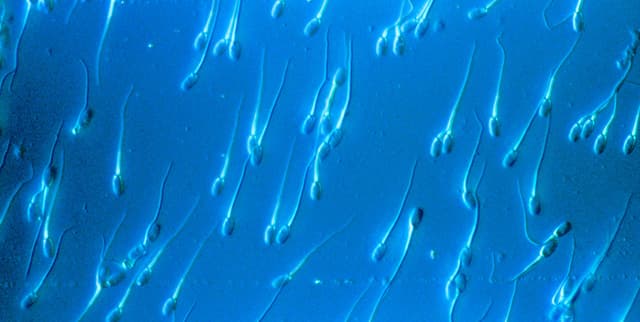
Updates to the 2010 World Health Organisation (WHO) laboratory manual for human semen examination are presented in this file, addressing the need for broader global representation in fertility data. While the 2010 standards relied on a limited subject range, this dataset incorporates extensive additional data obtained from published sources to formulate up-to-date lower reference values. It aggregates semen analysis results from over 3,500 subjects across twelve countries and five continents. The records focus specifically on fertile men—defined as those with current or formerly pregnant partners with a known Time to Pregnancy (TTP) of up to 12 months—providing a robust basis for clinical practice and fertility research.
Columns
- Publisher: The reference or source of the specific data entry (e.g., Tang).
- Semen_Volume: The total quantity of ejaculated fluid measured in millilitres (ml). Normal volume is typically considered between 2 and 5 ml.
- Sperm_Concentration: The number of sperm cells per millilitre of semen, measured in millions. A count below 15 million is often classified as Oligospermia.
- Total_Number: The aggregate count of sperm cells within the entire ejaculate.
- Total_Motility: The percentage of sperm displaying forward swimming motion, calculated as the sum of Progressive and Non-progressive motility.
- Progressive_Motility: Percentage of spermatozoa moving actively, either linearly or in a large circle, regardless of speed.
- Non-progressive_Motility: Percentage of sperm with motility patterns lacking progression (e.g., swimming in small circles).
- Immotile_Spermatozoa: Percentage of sperm showing no movement.
- Vitality: The percentage of live and intact sperm cells, often determined via dye staining.
- Normal_Forms: Also known as sperm morphology; this indicates the percentage of sperm cells with normal shape and size (oval head, connecting mid-piece, long tail) based on Kruger criteria.
Distribution
The dataset is provided in CSV format with a file size of approximately 231.11 kB. It contains data for roughly 3,589 subjects (rows). Data completeness varies by column; for instance, the 'Normal_Forms' column has a significant percentage of missing values (approx. 82%), while 'Semen_Volume' and 'Sperm_Concentration' show high validity. The structure allows for the analysis of distributions across different fertility parameters, such as volume ranges (hypospermia vs hyperspermia) and motility grades.
Usage
- Reference Range Establishment: Validating or modifying clinical reference values for male fertility.
- Medical Research: Comparative analysis of semen parameters across different geographic regions and demographics.
- Binary Classification Models: Training machine learning models to classify fertility status based on parameters like concentration and motility.
- Health Analytics: Investigating correlations between different semen parameters (e.g., vitality vs motility).
- Educational Demonstrations: Teaching tools for biology or medical students regarding human reproductive health standards.
Coverage
- Geographic: The data includes subjects from twelve countries across five continents, offering a broader scope than previous WHO datasets which lacked data from regions such as Africa or China.
- Demographic: Strictly focuses on fertile men, defined as those with partners who achieved pregnancy within 12 months.
- Time Range: Represents an update to data published in 2010, with the dataset itself collated for the 2020 WHO update.
License
CC0: Public Domain
Who Can Use It
- Fertility Specialists & Urologists: For benchmarking patient results against global fertile population standards.
- Data Scientists in Healthcare: For developing predictive algorithms related to reproductive health.
- Public Health Researchers: For analysing global trends in male fertility parameters.
- Medical Students: For understanding standard laboratory parameters for semen analysis.
Dataset Name Suggestions
- WHO 2020 Semen Parameters Update
- Global Male Fertility Reference Data
- Human Semen Analysis Trends 2020
- Fertile Man Semen Parameters Database
Attributes
Original Data Source: Global Male Fertility Reference Data
 QUALITY
Loading...