Robotics Data
What Is Physical AI Data? A 2026 Guide for AI Teams and Data Providers
Physical AI data refers to AI training data collected through interaction with the physical world. Unlike digital AI, which is trained to operate within digital systems such as software and LLMs, physical AI is trained on data drawn from tangible, real-world interactions to carry out real-time physical tasks, and this data is commonly collected from real-world environments.
In our previous article on robotics data, we explained how physical interactions teach robots to understand and complete real-world tasks. But here's the real question: what types of physical AI data do developers need? And where do they find quality data for training robots that operate safely in the real world?
To help you decide, this article covers what physical AI data is, the different types that robots need to learn, where it comes from, and what buyers and suppliers should know when sourcing or selling this critical training data.
Types of Physical AI Data
Physical AI data refers to AI training data collected through interaction with the physical world, used to teach robots how to understand and complete real-world tasks. Unlike data used to train digital AI systems, it comes from tangible, real-world interactions rather than software or text.
An easier-to-understand term for physical AI data is "robot training data". The two aren't exactly interchangeable, but the term helps clarify what physical AI data is for: robots.
According to data from Voxel51, 68% of physical AI teams now work across three or more data modalities, and only 6% rely on a single one. Video, time-series, and 3D/LiDAR data are all now considered standard rather than optional.
Here are the types of physical AI data that developers use to train their robots.
Egocentric Data Egocentric data is a type of robotics data captured from a first-person point of view. By filming humans' movements while performing physical work, robots learn what it looks like to handle a task correctly, and, of course, incorrectly. This first-person perspective is crucial for robots to understand how tasks should look from their own point of view as they navigate and interact with the world.
Hand Movement Tracking Hand movement tracking data helps robots imitate how humans use their hands to perform a task. Humans are more capable of performing sophisticated tasks than other animals because our fingers have joints that allow our hands to bend and work at different angles. By learning from hand movement tracking footage, robots can mimic how humans perform tasks that require fine movements, such as sewing and writing.
Object Detection Object detection datasets train robots to identify and locate objects. For example, if a robot is making coffee, it needs to determine how far away the machine is, and that's exactly what an object detection dataset teaches it. These datasets are fundamental for robots to understand their environment.
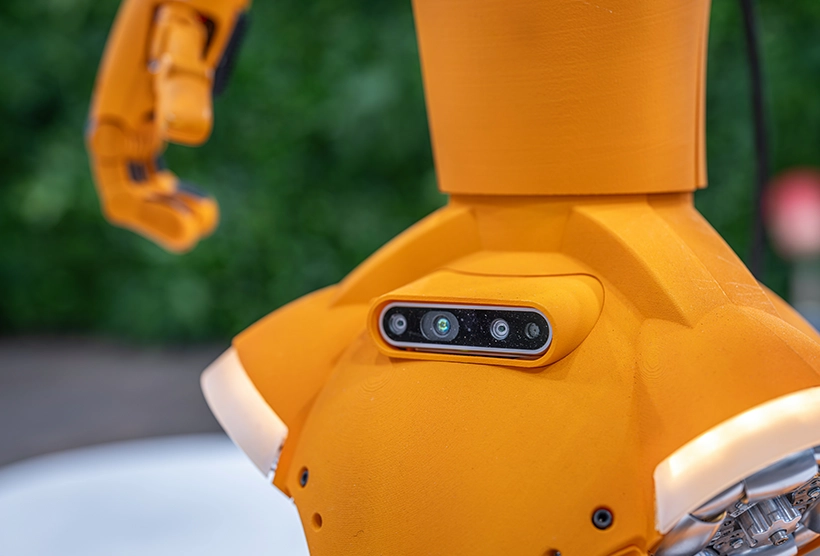
3D Environment Scan 3D environment scan datasets usually use LiDAR or a 3D depth camera to help robots build a 3D model, allowing them to understand the 3D structure of the environment and the depth of the space. This kind of dataset is especially crucial when building AI models like autonomous emergency braking (AEB), where precise spatial understanding is essential.
Sensor, Grasping and Manipulation Data Sensor data gives robots a sense of the world around them. Without sensor data, robots can only watch the world like a film. Sensor data provides robots with senses such as touch or weight. Grasping and manipulation data records how humans hold an object, including details such as where to place fingers when grabbing an object and how hard the grip should be. Trained on these datasets, a robot can work out how hot a cup of coffee should feel and how hard to grip a paper cup without crushing it.
Navigation Data Navigation data determines how a robot plans its route when carrying out a task. Systems like GPS and indoor positioning systems (IPS) are both types of navigation data. It allows robots to choose the right route without bumping into other things, enabling autonomous movement in complex environments. Browse more physical AI datasets here.
Where Physical AI Data Comes From: Real-World Capture vs. Synthetic Generation
AI developers can create virtual worlds for AI training or generate data synthetically. But can physical AI data be sourced the same way?
The answer is no. Synthetic data can be a supplement, but real-world data is the ground truth.
Why? Because physical AI data is unique, messy, and unpredictable. Training a robot on synthetic data alone is risky, since it lacks a grounded understanding of the real world. It may go wrong when encountering a new environment. It may make mistakes when the objects it encounters differ from those in the synthetic dataset. And most importantly, it may put humans in danger if it makes the wrong decision.
That is why developers should be more cautious. It's always better to train a robot thoroughly to avoid mistakes than to face the serious consequences of an accident it could cause. Even though non-synthetic data drawn from real events, environments, and human activity—such as dashcam footage, warehouse recordings, wearable camera footage, drone surveys, and factory floor recordings—is messy and unscripted, that's exactly what developers need, because the real world is chaotic.
Why Physical AI Data Matters Now
According to research, the global physical AI market size is projected to grow by 35.78% from 2025 to 2026, with a Compound Annual Growth Rate (CAGR) of 36.14% from 2026 to 2033.
How can the market grow so fast? The answer combines two factors: rising demand for machines for industrial automation and the need to ensure robots' safety. According to Kaiso Research, labour shortages in manufacturing, warehousing, and logistics have pushed companies to adopt AI-integrated robots, with firms like Amazon, Hyundai, and BMW already using physical AI for commercial purposes.
Yet even while demand for automation rises, developers are struggling with the main obstacle: safety. Kaiso's researchers describe safe, reliable operation in unstructured, real-world environments as physical AI's most significant engineering challenge. Indeed, the real world is unpredictable. Robots, unlike humans, can't improvise or adapt instinctively to situations they haven't seen before. They can only rely on the data they were trained on, which is why physical AI data is precious and becoming one of the most important data classes on the market.
Who Uses Physical AI Data: Guidance for Buyers and Suppliers
The rapidly growing physical AI market brings together data buyers seeking to train robots and data suppliers offering real-world training data. Here's what each side should know.
For Data Buyers When browsing physical AI data online, you need to make sure not only that the data is relevant to your project, but also that you understand how suppliers obtained it and how you're permitted to use it. Choosing an AI data product from a supplier that is trustworthy and can guarantee the source of its data is essential. It's also important to double-check the dataset's licence terms to avoid any legal issues.
Opendatabay screens every data supplier and their data products before anything gets listed. Buyers can read each data product description, sample, usage terms, and licence type, and check its quality rating through the Universal Data Trust Rating (UDTR) before buying. You can always reach out to ask more questions about a supplier or a specific product.
For Data Suppliers For data suppliers, building trust with buyers is crucial. When selling a data product, you need to be transparent about where the data came from, what rights you have, how the data was produced, and who you are as a data provider. You also need to remove any data that may violate others' privacy, or any data you're not the actual owner or licensee of.
By building a trustworthy, licensed physical AI data trading platform, Opendatabay aims to give buyers a shopping experience where dataset quality and legality are never a worry. It stops robots from getting things wrong—or worse, endangering humans—by ensuring they're trained on data that reflects the real world they'll encounter.