Robotics Data
What is Robotics Data? A Guide to Egocentric, LiDAR & Sensor Datasets
An overview of robotics data: the sensor, vision, and feedback datasets used to train perception, navigation, and manipulation models.
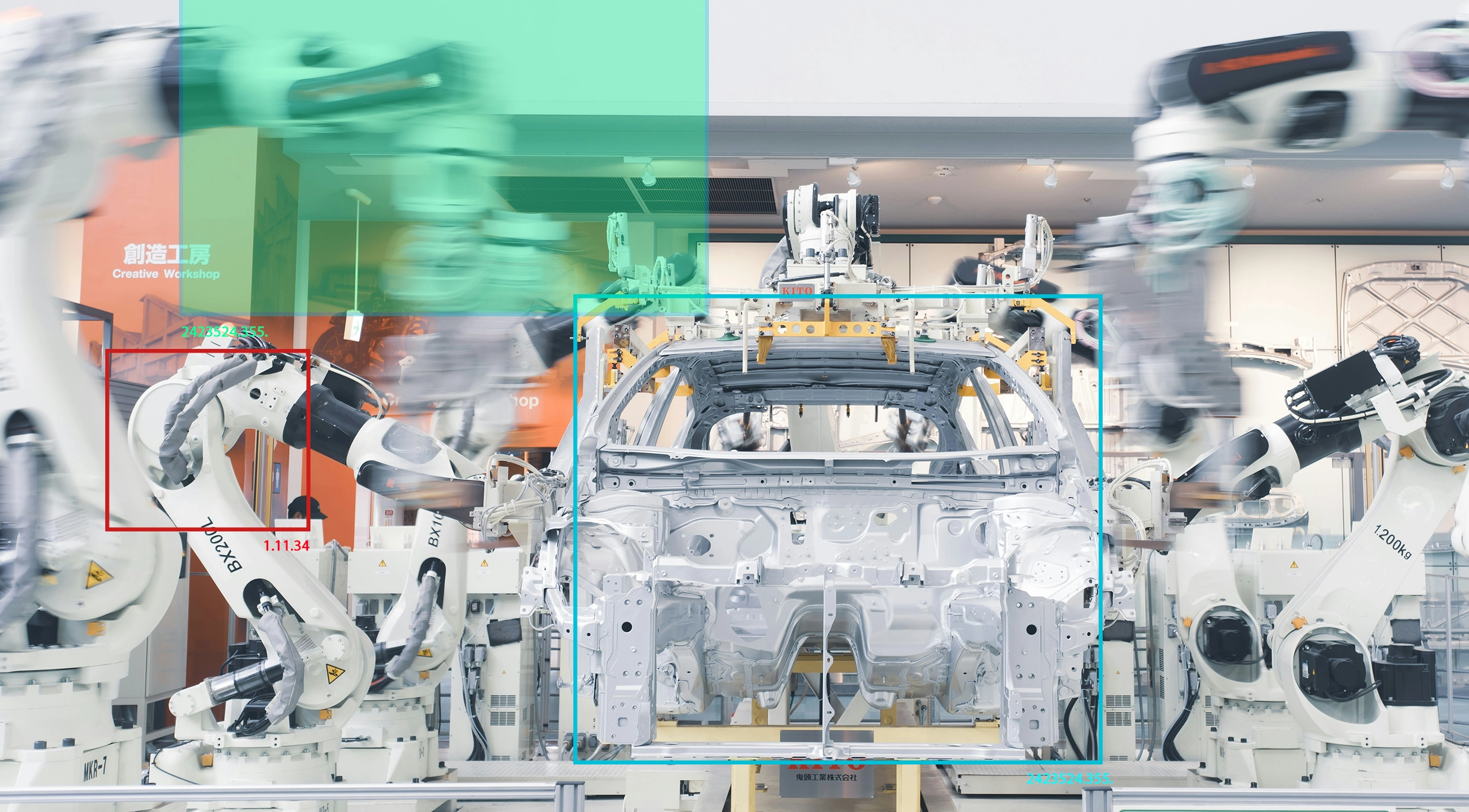
Alongside the rise of LLMs, developers are increasingly applying AI to robotics. Not just the robots that clean floors or work factory production lines, but the ones woven into everyday life, like self-driving cars.
The challenge is that as robots become more integrated into daily life, it gets harder to design one that can handle every real-world situation. That difficulty comes down to two things: how unpredictable the physical world is, and how precise a robot has to be to complete a task safely.
What Is Robotics Data?
Robotics data is the set of datasets developers use to train and refine AI models for robots. It spans everything involved in building a robot: text, images, video, and audio, plus the performance data collected after deployment to evaluate how well it behaves. Robotics data teaches robots how to perform specific tasks, avoid risks, and interact correctly with humans in the real world.
Training a robot to physically interact with the real world is far harder than it sounds. To behave correctly across different situations, a robot needs large volumes of data showing it how to react in a given scene, where even small differences within that scene can matter enormously.
For example, to train a self-driving system, developers need to feed in data that teaches the vehicle to stop at a red light, wait when pedestrians are crossing, and react when a scooter suddenly pulls out of an alley. It isn't enough to cover scenarios one at a time. The model needs a large enough volume of varied data to reliably recognise real-world situations it hasn't seen before.
A concrete example on Opendatabay: the POV Robotic Behavior Video Dataset. It consists of first-person (POV) generated video content covering daily-life scenarios such as desk organisation, household cleaning, and general home activities. The footage simulates human-perspective visual input, providing diverse embodied interaction data for Vision-Language-Action (VLA) model training and multimodal perception research. A similar type of data can be found in the Simaihub Mobile Robot Navigation Training Dataset.
Robotics data differs significantly from the data used to train LLMs. LLM training data can be broad. If developers use poor-quality data, the model may respond in an unnatural or incorrect way. But the stakes with robotics data are higher: because robots act physically in the real world, a mistake can carry real safety risks, not just a bad response. That's why robotics data also needs to be far more specific; it's what allows a model to interact with the physical world safely and precisely.
Egocentric Data: The Shortage of Valuable AI Training Data
Before diving into egocentric data, which is one of the most important types of robotics data, it helps to see the problem from a robot's point of view. When an AI-powered robot reacts to the world or carries out a task, it experiences that task the way we do: through its own eyes. In other words, while a human observer might watch a robot from a third-person camera angle, the robot itself works entirely from a first-person point of view. That means third-person video alone isn't enough to train the model powering the machine.
Egocentric data solves this by capturing footage from a first-person point of view, essentially teaching a robot, "this is what you'll see while doing this task." The actual collection of this type of data is not simple. A few known reasons why the collection exercise is not as simple as it seems to be:
- The embodiment gap: a human body doesn't move the way a robot does.
- Noise: because the camera is mounted directly on a person, it also picks up disruptive motion, like wrist twists or head tilts.
- Strict hardware standardisation: even a small difference in camera angle can significantly hurt accuracy.
- Annotation costs: humans need to label footage frame by frame for a model to make sense of it.
- Privacy and legal risk: the camera may capture people who haven't consented to being filmed, or tasks are executed within a space where owners haven't given consent for the footage to be collected.
For example, the Real Industrial Video Dataset for Computer Vision on Opendatabay contains real-world industrial video clips filmed inside a window manufacturing facility. Each clip comes with privacy-focused anonymisation, structured metadata, certified annotations, and multiple enrichment layers built for AI training, evaluation, and benchmarking. Another example is Wreck-7K: 7,000-Hour Real-World Human–Object Interaction Video.
Developers can also collect egocentric data in virtual environments: 3D rooms, synthetic worlds, or sandbox engines where a robot has a digital twin, to build and simulate tasks and test performance before any physical hardware exists. Even game worlds are being used to collect robotics data.
The Industrial Electric Motor Thermography Dataset, for instance, provides real thermographic inspection data for electric motors in an industrial plant, built to support condition monitoring, fault detection, and predictive maintenance. A related example, the London Office (3 Floors) Point Cloud, shows the same kind of structured spatial data applied to a very different setting. This dataset helps robot manufacturers train their models for navigation accuracy and helps robots understand physical architecture and surroundings.
LiDAR & Sensor Datasets: The Backbone of a Robot's Nervous System
Picture riding in a self-driving car. Have you ever wondered how the system knows exactly how close it should stop? LiDAR and sensor datasets are what's used to train an AI system to measure distance in the real world. Much like a human nervous system warns us of danger, LiDAR and sensor data effectively build the nervous system for machines, drones, and autonomous vehicles.
Building Partnerships with Opendatabay
Opendatabay is one of the few data marketplaces that specialise in robotics and physical licensed AI training data. We give AI training data buyers and providers a straightforward, transparent platform to trade AI training data.
Robotics data is the fastest-growing category on Opendatabay. The AI training data listed here is what's going to power the next generation of robots.
We work with a wide network of egocentric data providers. One example is Merit Data, which specialises in egocentric video, robot teleoperation data, multimodal datasets, and custom data collection for robotics and embodied AI companies. Their 10,000 Hours Residential Mono Egocentric Video Dataset is a good example of the kind of training data available on the platform.
Opendatabay supports data providers with consultation and protects buyers from legal risks through data licences.
Browse our robotics AI training data here.
With a growing partner network, data buyers typically pay between $3 and $175 per hour of footage (from basic surveillance-style footage to highly structured egocentric video), depending on region, licensing terms, and task quality. To help both providers and buyers avoid legal issues, Opendatabay only lists data collected with the consent of factories, business owners, and individuals appearing in the footage. That's part of why the platform has built partnerships with data collectors across Latin America, Europe, and Asia.
Already collecting egocentric data? Get in touch! We'd love to work with you.
Frequently Asked Questions
What is egocentric data used for?
It trains robots and embodied AI systems, including humanoids, industrial arms, and VLA models, to understand a task from a first-person point of view, which more closely matches what the robot itself "sees" while doing a specific task.
Why is robotics data different from LLM training data?
LLM training data is largely text-based and broad in scope. LLMs predict the next word in a sentence, whereas robotics data defines instructions and predicts the next move. Robotics data must be far more specific and physically grounded, since it directly shapes how a robot interacts with the real world, and errors can have real safety consequences.
How is egocentric data priced?
Pricing varies by region, licensing terms, and task complexity. It typically ranges from a few dollars to over $100 per hour of footage.