
Dark Mode


Bangalore Public Transport Mobility Dataset
Tranportation & Public Transport
Tags and Keywords
Trusted By



"No reviews yet"
Free
About
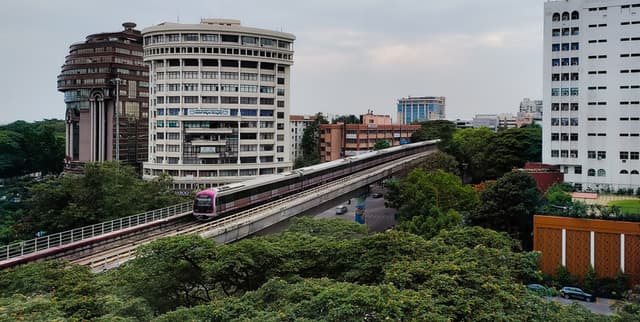
Tracking the daily pulse of Bangalore’s metro system provides a detailed view of urban mobility and transit behaviour. Because the Bangalore Metro Rail Corporation Limited (BMRCL) only releases ridership figures every 24 hours without maintaining a public archive, this collection fills a vital gap by preserving historical daily records. It documents how passengers navigate the city using various ticket types, offering a longitudinal perspective on public transport demand and access patterns in one of India's fastest-growing metropolitan areas.
Columns
- Record Date: The specific date for which the ridership statistics were recorded, provided in DD-MM-YYYY format.
- Total Smart Cards: The aggregate number of journeys completed using any form of stored value smart card.
- Stored Value Card: Usage data specifically for regular metro smart cards that hold a pre-paid monetary balance.
- One Day Pass: The count of 24-hour unlimited journey passes utilised by commuters.
- Three Day Pass: The count of 72-hour unlimited journey passes utilised by commuters.
- Five Day Pass: The count of 120-hour unlimited journey passes utilised by commuters.
- Total Tokens: The number of single-journey tokens purchased by passengers at station counters.
- Total NCMC: The total number of journeys made using National Common Mobility Cards.
- Group Ticket: Records of special tickets issued for group travel, typically used by parties of 15 or more passengers.
- Total QR: Tickets purchased through digital platforms such as WhatsApp or PayTM and validated via QR readers at turnstiles.
Distribution
The information is delivered in a CSV file titled
NammaMetro_Ridership_Dataset.csv with a file size of approximately 23.14 kB. It contains 296 unique valid records across 10 primary columns, exhibiting a 100% validity rate with no missing or mismatched data. The resource is updated on a weekly basis to ensure the inclusion of the most recent transit figures.Usage
This resource is ideal for performing time-series analysis to identify peak travel days and seasonal ridership shifts within the Bangalore metropolitan area. Urban planners can use the metrics to evaluate the adoption of different ticketing technologies, such as the transition from physical tokens to digital QR codes or NCMC. Additionally, it serves as a robust foundation for building predictive models regarding public transit loads and future infrastructure requirements.
Coverage
The geographic scope is limited to the Namma Metro network in Bangalore (Bengaluru), India. Temporally, the data captures a continuous record starting from 26 October 2024. The demographic coverage encompasses all metro commuters, categorised by their ticketing preferences and travel frequency across the city's transit network.
License
CC0: Public Domain
Who Can Use It
Transportation analysts can leverage the daily figures to study transit efficiency and passenger flow throughout the week. Urban planning professionals may utilise the identified patterns to inform future station developments and accessibility improvements. Furthermore, academic researchers and data science students can employ the structured records to practice time-series forecasting and explore the impact of digital payment adoption on public infrastructure.
Dataset Name Suggestions
- Bengaluru Namma Metro Daily Ridership Archive
- Bangalore Transit Patterns and Ticketing Statistics
- Namma Metro Historical Ridership Registry
- Daily Metro Traffic and Fare Usage in Bengaluru
- Bangalore Public Transport Mobility Dataset
Attributes
Original Data Source: Bangalore Public Transport Mobility Dataset
 QUALITY
Loading...
Free
Download Dataset in CSV Format
Recommended Datasets
Loading recommendations...